
시험 이름: SAS 9.4 Base Programming - Performance-based exam (A00-231日本語版)
인증사: SASInstitute
인증시험: SAS Institute Systems

이상 63334+ 고객만족도
다운로드 SASInstitute : A00-231日本語 질문 & 답 PDF & Test Software

결제후 바로 다운가능: 결제가 완료되면 시스템 자동으로 구입한 제품을 고객님 이메일로 발송해드립니다. (12 시간 이내에 받지못하셨다면 메일이나 온라인 서비스 상담으로 문의하십시오.) 참고 : 스팸메일함도 확인하는 것을 잊지 마십시오.
60일내 100% 환불보장
몇년간 시험결과에 대한 조사에 의하면 저희 덤프 합격율은 99.6%에 달한다는 결과를 얻었습니다.  저희 제품에 신심을 갖고 시험에 도전해보세요.
- 최고시험공부자료
- 세가지 버전 선택 가능
- 365일 무료 업데이트
- 수시로 공부가능
- 100% 안전한 쇼핑체험
- 불합격시 60일내 덤프비용 환불
A00-231日本語 덤프 PDF버전
- 출력가능한 PDF버전
- IT전문가가 출시한 공부자료
- 결제후 바로 다운가능
- 언제 어디서나 공부 가능
- 365일 무료 업데이트
- PDF버전샘플 무료다운
- PDF버전 샘플문제 다운받기
- 문항수: 298
- 최신업데이트체크시간: Oct 13, 2026
- 가격: $69.98
A00-231日本語 소프트웨어버전
- 실력테스트 가능한 소프트웨어버전
- 실제 시험환경 체험가능
- 시험패스에 자신감이 생김
- MS시스템을 지지
- 시험대비 테스트엔진버전
- 수시로 오프라인 연습
- MS프로그램 캡쳐보기
- 문항수: 298
- 최신업데이트체크시간: Oct 13, 2026
- 가격: $69.98
A00-231日本語 온라인버전
- 공부를 가장 편하게 할수 있는 온라인버전
- 즉시 다운로드 가능
- 모든 웹브라우저에 적용
- 언제든 공부 가능한 버전
- 높은 시험패스율
- Windows/Mac/Android/iOS등을 지지
- 온라인버전 체험하기
- 문항수: 298
- 최신업데이트체크시간: Oct 13, 2026
- 가격: $69.98
SASInstitute A00-231日本語 시험요강:
| 주제 | 소개 |
|---|---|
| 주제 1 |
|
| 주제 2 |
|
| 주제 3 |
|
| 주제 4 |
|
| 주제 5 |
|
우선 시험센터에서 정확한 시험코드를 확인하고 그 코드와 동일한 코드로 되어있는 덤프를 구매하셔서 덤프에 있는 문제와 답을 기억하시면 시험을 쉽게 패스하실수 있습니다. A00-231日本語덤프는 가장 최근 기출문제를 기준으로 제작되기에 SAS 9.4 Base Programming - Performance-based exam (A00-231日本語版)시험문제가 변경되지 않는한 100%에 가까운 적중율을 보장해 시험에서 패스하는데 가장 좋은 동반자로 되어드릴것입니다.
구매전 덤프 샘플문제 다운
A00-231日本語덤프를 구매하기전에 사이트에서 해당 덤프의 무료샘플을 다운받아 덤프품질을 체크해보실수 있습니다. SAS 9.4 Base Programming - Performance-based exam (A00-231日本語版)덤프를 구매하시면 구매일로부터 1년내에 덤프가 업데이트된다면 업데이트된 버전을 무료로 제공해드립니다.만약 A00-231日本語덤프를 구매하고 공부한후 A00-231日本語시험에서 떨어지면 60일내 주문은 덤프비용 전액을 환불해드려 고객님의 이익을 최대한 보장해드립니다.
시험전 20-30시간의 공부시간
자격증을 취득하려면 오랜시간동안 시험공부를 해야 한다고 생각하시는 분들이 많습니다. 하지만 이는 A00-231日本語덤프가 아닌 다른 공부방법에 적용되는 보편적인 생각일뿐입니다. A00-231日本語덤프를 공부하시는데는 20~30시간만 사용하시면 됩니다.덤프만 있으면 다른 공부자료는 필요하지 않습니다.덤프는 SAS 9.4 Base Programming - Performance-based exam (A00-231日本語版)시험문제의 모든 범위와 유형을 포함하고 있어 A00-231日本語덤프에 있는 문제와 답만 기억하시면 시험문제가 변경되지 않는다면 합격을 예약한것과 같다고 보시면 됩니다.
퍼펙트한 시험대비자료
A00-231日本語 최신덤프는 A00-231日本語실제시험의 모든 범위를 커버하고 있고 모든 시험유형이 포함되어 있어 시험대비 공부의 완벽한 선택입니다.최신버전 덤프는 SAS 9.4 Base Programming - Performance-based exam (A00-231日本語版)시험문제에 근거하여 만들어진 시험준비 공부가이드로서 학원공부 필요없이 덤프공부 만으로도 시험을 한방에 패스할수 있습니다.자격증을 취득하시면 국제적으로 인정받기에 취직이나 승진 혹은 이직에 힘을 가해드립니다.
최신 SAS Institute Systems A00-231J 무료샘플문제
WORK.SALARYというSASデータセットには、各部門ごとに10個の観測値が含まれており、現在はDepartment(部門)順に並べられています。以下のSASプログラムを実行します。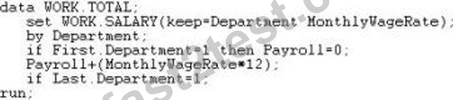
どちらの記述が正しいでしょうか?
- A. 変数 Payroll の値は、WORK.SALARY データ セット内のすべての WAGERATE 値の月間合計を表します。
- B. DATA ステップの by ステートメントにより構文エラーが発生します。
- C. 変数 Payroll の値は、WORK.SALARY データ セット内の各部門の月間合計を表します。
- D. データ ステップ内のステートメント Payroll+(MonthlyWageRate*12); により構文エラーが発生します。
정답: C 🗳️
전체 60페이지 중 1페이지 보는 중.
전체 298문항 중 1-5문항 보는 중.
 0 개 고객 리뷰고객 피드백 (*일부 유사하거나 오래된 댓글은 숨겨졌습니다.)
관련시험
결제후 바로 다운가능 A00-231日本語
덤프를 주문하시면 결제완료후 1분내에 주문시 사용한 메일로 덤프 다운로드 링크가 발송됩니다.
365일 무료 업데이트서비스
구매일로부터 365일 업데이트서비스 제공, 365일후 업데이트를 받으려면 덤프를 50%가격으로 재구매 하시면 됩니다.

덤프비용 환불약속
덤프구매후 60일내에 시험을 보셔서 불합격 받으시면 덤프비용 전액을 환불해드리거나 다른 과목으로 교환해드립니다..
프라이버시보호정책
저희는 고객님의 프라이버시를 존중 합니다. 주문 진행, 서비스 제공, 그리고 지원과 새로운 출시 제품 또는 모든 업데이트 소식을 보내는 등 오로지 정해진 목적으로만 정보를 수집하고, 저장하고 사용 합니다.

우리와 연락하기
문의할 점이 있으시면 메일을 보내오세요. 12시간이내에 답장드리도록 하고 있습니다.
근무시간: ( UTC+9 ) 9:00-24:00
월요일~토요일